Starring Jonas Kaufmann as Bacchus and featuring Emily Magee with Daniel Harding conducting the Vienna Philharmonic, Ariadne auf Naxos was filmed at the acclaimed Salzburg Festival in 2012. This release also includes "Le Bourgeois gentilhomme."
Movies like Ariadne auf Naxos
The Phantom of the Opera
The deformed Phantom who haunts the Paris Opera House causes murder and mayhem in an attempt to make the woman he loves a star.
German composer Richard Wagner wrote Parsifal, which is a three-act opera that tells the story of the title character's quest to save the Knights of the Holy Grail by returning the Holy Spear, healing King Amfortas, and carrying out the sacred ceremony of uncovering the Holy Grail.
The 2021 production by the Dutch National Opera of the work by German composer Rudi Stephan (1887–1915) "Die ersten Menschen" ("The First Humans"), completed in 1914 to a libretto by Otto Borngräber interpreting the Biblical story of the Garden of Eden through symbolism and the then nascent science of psychoanalysis. This production was part of the Holland Festival of Amsterdam.
The world premiere of composer Kaija Saariaho's opera, "Innocence", at the 2021 Aix-en-Provence Festival. Finland is the setting but the protagonists come from the four corners of Europe: a Finnish groom and his Romanian bride, a French mother-in-law and a Czech maid. Around them memories unravel in a contemporary tragedy of guilt and lost innocence.
Kristine Opolais is the young woman whose conflicting desires for love and luxury lead to her tragic end, and Roberto Alagna plays the man who falls for her in Puccini’s early hit. Richard Eyre’s elegant production, which sets the action in 1940s occupied France, was one of the highlights of the Met’s 2015–16 season. Massimo Cavalletti as Manon’s brother and Brindley Sherratt as her aging admirer co-star, and Principal Conductor Fabio Luisi is on the podium.
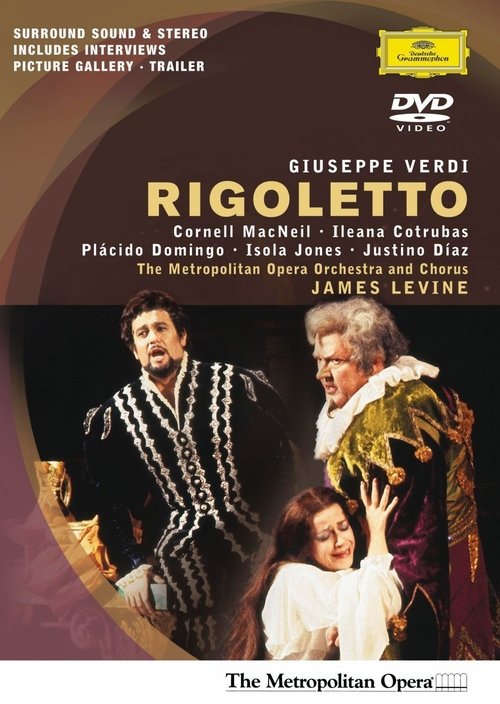
This tragic story revolves around the licentious Duke of Mantua, his hunch-backed court jester Rigoletto, and Rigoletto's beautiful daughter Gilda. The opera's original title, La maledizione (The Curse), refers to the curse placed on both the Duke and Rigoletto by a courtier whose daughter had been seduced by the Duke with Rigoletto's encouragement. The curse comes to fruition when Gilda likewise falls in love with the Duke and eventually sacrifices her life to save him from the assassins hired by her father.
Viva Vivaldi! is a concert by the Italian mezzo-soprano Cecilia Bartoli interspersing arias from the 20 surviving operas of Vivaldi with two concertos. Given with the early music ensemble Il Giardino Armonico before a very appreciative audience in the Théâtre des Champs-Élysées, the performance is part of Bartoli's exploration of the Venetian composer's opera music which also includes The Vivaldi Album. There is a startling dynamic energy, which contrasts powerfully with the more restrained interpretations by singers such as Emma Kirkby. Bartoli's natural Italian and the live atmosphere of Maria Grazia d'Alessio's oboe gives her interpretation of the quietly haunting and melodically rich "Non ti Lusinghi la Crudeltade" from Tito Manlio a particular piquancy. The Flautino Concerto is a most attractive interlude, while the more famous Lute/Violin Concerto beguiles with its exquisite lyricism.
John Eliot Gardiner conducts Gluck’s 1776 French version of “Alceste” at the Théâtre du Châtelet in Paris. Soprano Anne Sofie von Otter takes the title role of Alceste, Queen of Thessaly, who offers to die at the hands of the gods in place of her husband, Admète (Paul Groves), so that the people will not lose their king. Alceste is then saved from the underworld by Hercule (Dietrich Henschel).
It took Anna 10 years to recover from the death of her husband, Sean, but now she's on the verge of marrying her boyfriend, Joseph, and finally moving on. However, on the night of her engagement party, a young boy named Sean turns up, saying he is her dead husband reincarnated. At first she ignores the child, but his knowledge of her former husband's life is uncanny, leading her to believe that he might be telling the truth.
Francesco Cilea's Adriana Lecouvreur was inspired by the real-life story of a celebrated actress at the Comédie-Française who was much admired by Voltaire. Hailed as a masterpiece, the opera was triumphantly staged in cities around the world after its premiere in 1902. The dramatically effective narrative is a passionate love triangle filled with intrigue and complicated plot twists set in the gallant 18th century. Its subtle ironies and gorgeous cantabile style of music provide a perfect vehicle for the star cast in this stunning production from the Teatro del Maggio Musicale Fiorentino.
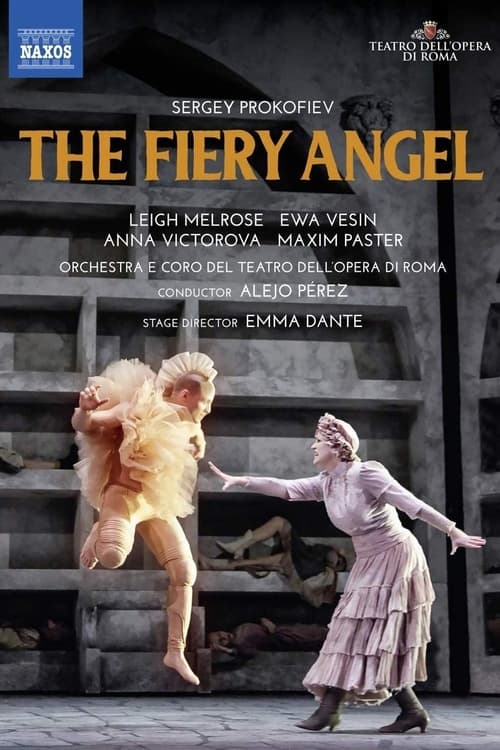
Sergey Prokofiev's operatic tragedy The Fiery Angel was never performed in the composers lifetime the musics brittle energy, drama and eloquent lyrical tenderness would re-emerge in his Third Symphony. The narrative focuses relentlessly on Renata, who is haunted by an angel who turns out to be the devil. Director Emma Dante describes the opera as an explosive mix of fantastical realism and endless confusion of nightmares, madness, sexual impulses and cultural clashes, and this Teatro dellOpera di Roma production was acclaimed as a presentation of Prokofievs masterpiece which sparkles in all its grotesque glory (operawire.com)
A film version of the famous Bizet opera, where a soldier (Don Jose) falls in love with a beautiful factory worker (Carmen), but she does not reciprocate his feelings.
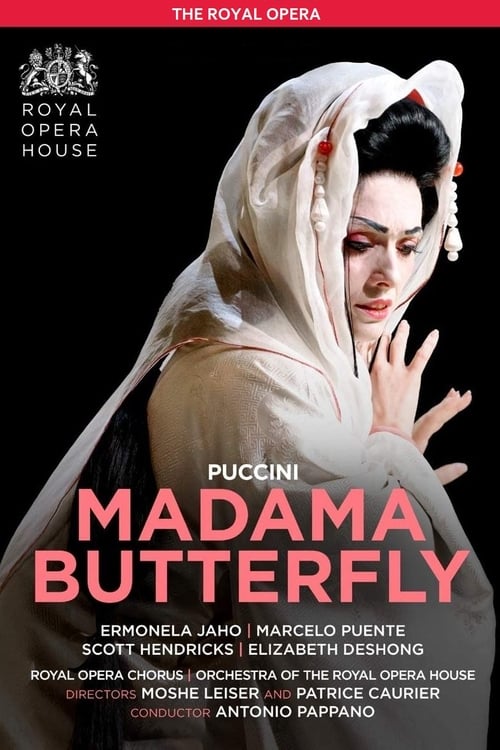
Cio-Cio-San, a young Japanese geisha, seeks to fulfill her dreams through marriage to an American naval officer. Her faith in their future is shattered by his empty vows and the loss she endures touches something deep within us all.
A Victor Hugo play, haunting and scandalous, provided the inspiration for Verdi’s mid-career masterpiece. A vengeful but misguided court jester strives to save his daughter from a duke’s licentious clutches, but can't part with the feeling that a curse looms over all of his actions. In Rigoletto, the composer introduces several of his most iconic arias and duets—as well as an 11th-hour quartet that counts among the finest moments in opera.
Marc Minkowski conducts the Orchestra and Chorus of the Opera National de Lyon in this 1997 production of Offenbach's opera starring Natalie Dessay, Yann Beuron, Jean-Paul Fouchecourt and Laurent Naouri.
This superb 2006 production of the Los Angeles Opera's La Traviata stars Renée Fleming, who joins the ranks of the elite handful of sopranos whose vocal and acting talents make their portrayals memorable. Her Violetta Valéry is a vulnerable figure torn between self-indulgence and love, sacrificing personal happiness to become a victim of the social mores of mid-19th-century bourgeois France. Fleming's acting captures the complexity of the character and her vocalism is flawless. She negotiates the wild coloratura of Act One with aplomb, and is stunning in the lyric passages that pervade the opera, and touching in her scenes with her lover, Alfredo, and his father. Her singing is free of the mannerisms that have sometimes crept into her work and at the same time she brings countless personal touches to the role, phrasing and verbal emphases that shed fresh light on the character.
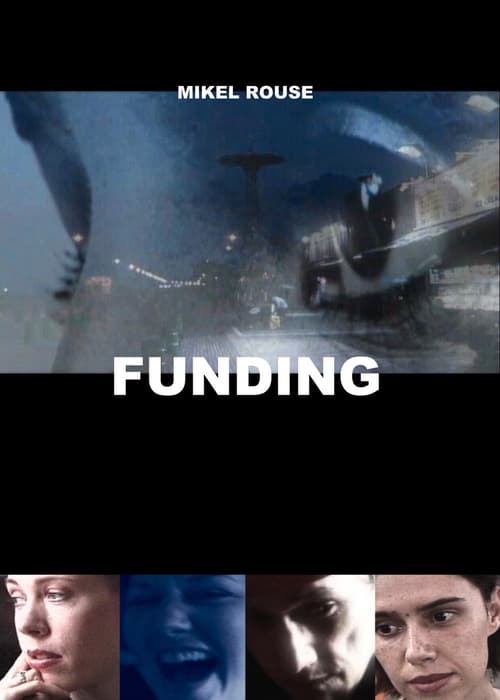
Vivian, Roe, JJ, Ines and a mysterious French man through a 20 year musical memory of New York City. As people and places in their lives drift away, visual impressions meld with sound and narrative stories to reveal a complex yet moving tableau. As the characters recall their own personal histories, conflicting images reveal their past, present and future.
Richard Wagner called Die Walküre the “first evening” of the Ring of the Nibelung; he called Das Rheingold the prologue or Vorabend. Musically and dramatically, we are introduced to a radically new and different world when the opening bars of Die Walküre resound. A fully developed orchestral palette of Leitmotivs paints a wild storm scene, and the curtain rises on a modest dwelling: a fully human scene that has nothing to do with the gods, dwarves and nymphs of Das Rheingold. At the same time, however, the way Die Walküre portrays radical beginnings reveals some telling reminiscences of the unfolding of Das Rheingold. Die Walküre is exciting and deeply feeling drama.